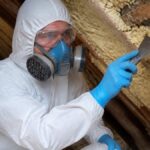
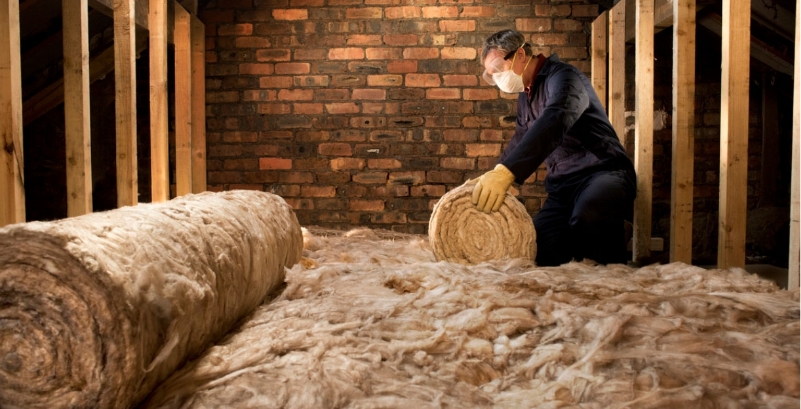
Eye protection must be impact-resistant and fitted to prevent particles entering from the sides. Standard safety glasses are adequate; full-face shields offer additional protection if you’re working overhead or in confined spaces.
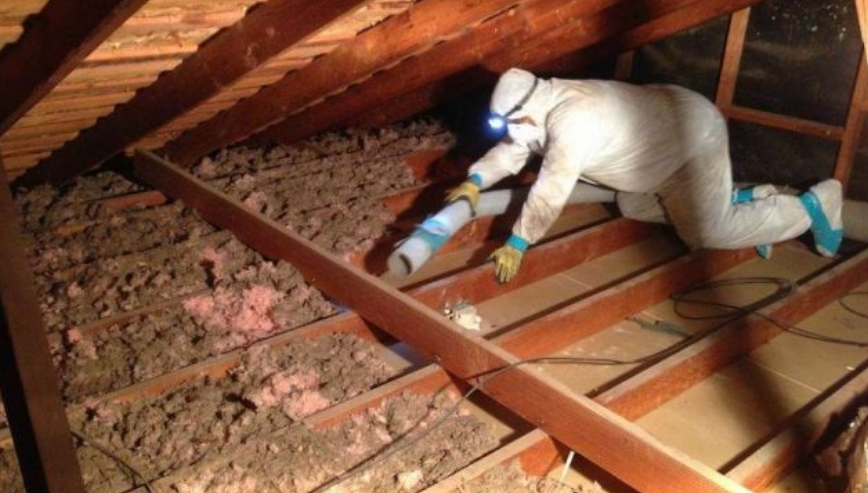
Protective clothing should be disposable or dedicated to the removal work. Spray foam dust adheres to fabric and can be carried into living areas. Full-body coveralls, disposable gloves (nitrile or latex), and dedicated footwear or shoe covers prevent cross-contamination of your home.
Glove selection is straightforward: nitrile or latex gloves, changed frequently. Foam particles and any chemical residues can irritate skin through prolonged contact.
The specific PPE specification depends on the foam type, its condition, and the work environment. A professional surveyor or removal specialist assesses these factors and specifies the correct PPE tier before work begins.
A safe removal follows a structured process. This is where spray foam removal safety standards translate into actual practice.
Step 1: Pre-removal inspection and hazard assessment. Before any cutting begins, the area is inspected for asbestos (in older foam), moisture damage, pest contamination, and structural integrity. This assessment determines the removal method, PPE requirements, and containment strategy.
Step 2: Work area containment and ventilation. The removal space is isolated from the rest of the building.
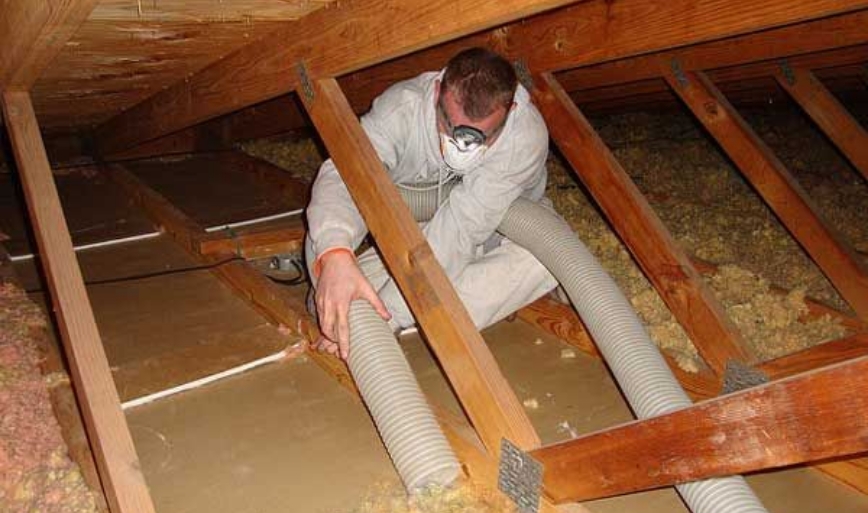
Step 3: Cutting and scraping. Foam is cut using utility knives, reciprocating saws, or specialised foam removal tools. The cutting method depends on the foam type and thickness.
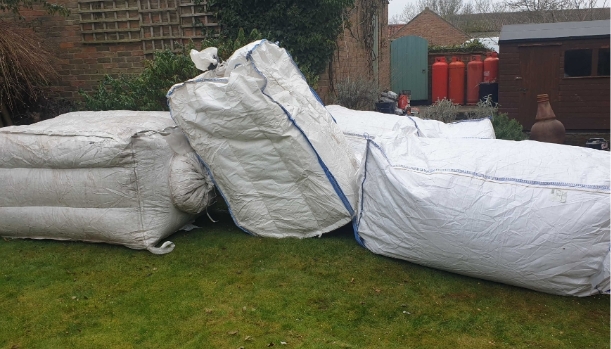
Step 4: Removal and bagging. Cut foam is placed directly into heavy-duty waste bags or containers. It’s not compressed or crushed further, that generates additional dust. Bags are sealed immediately to contain any remaining particles.
Step 5: Surface cleaning and verification. Once foam is removed, the underlying structure is inspected, photographed, and cleaned. Any residual foam dust or particles are vacuumed using HEPA-filtered equipment.
Step 6: Waste disposal. Spray foam is not recyclable in most UK waste streams. It’s classified as general waste and disposed of through licensed waste management facilities.
Throughout this process, workers maintain respiratory protection, work in controlled conditions, and follow containment protocols. A rushed removal skips or abbreviates steps 1, 2, and 5, exactly where problems develop.
Once removal is complete, you need documentation. A spray foam removal certificate is not a legal requirement in itself, but it’s essential for mortgage approval, equity release applications, and future property sales.
The certificate documents that removal was carried out to professional standards and that the underlying structure was inspected. It typically includes photographs of the work, details of the removal method, confirmation of waste disposal, and a statement that the area is now clear of spray foam and safe for use. Some lenders specify the format and detail they require; others accept any professional removal certificate.
The value of a removal certificate lies in its credibility. A certificate from an unqualified person or a one-person operation carries little weight with lenders. A certificate from a surveyor or specialist removal company with professional indemnity insurance, years of experience, and a track record of lender acceptance is far more valuable.
The certificate should also flag any structural issues discovered during removal. If rot, water damage, or pest damage is found, the certificate documents its extent and recommends remedial action. This transparency actually strengthens the certificate’s credibility, lenders know that hidden damage is far worse than identified and addressed damage.
This is where safety standards meet practical reality. Can you remove spray foam yourself? Technically, yes, it’s not a regulated trade. Should you? That depends on several factors.
DIY removal risks include inadequate respiratory protection, poor containment leading to cross-contamination, incomplete removal leaving residual foam or particles, and no professional documentation. Many homeowners who attempt DIY removal report respiratory symptoms, dust in living areas weeks later, and lenders rejecting the property because there’s no credible removal certificate.
Professional removal advantages extend beyond safety. A professional surveyor assesses the foam type, condition, and underlying structure before removal. They specify appropriate PPE and containment. They use proper tools and methods. They document the work with photographs and a professional certificate. They arrange proper waste disposal. They identify and can advise on structural issues.
Legal duties matter here. Under the Health and Safety at Work etc. Act 1974, anyone undertaking work that poses a hazard to health must manage that risk. If you’re removing foam in your own home for your own use, you have a duty to manage the risks, which includes using proper PPE, containment, and ventilation.
For most homeowners, professional removal is the safer, faster, and ultimately more cost-effective option. The certificate alone is worth the investment when it means your property can be sold, refinanced, or extended without lender objections.
The work doesn’t end when the foam is extracted. Post-removal inspection and documentation are where safety standards become proof.
Visual inspection confirms that all foam has been removed and the surface is clean. Residual foam or particles indicate incomplete work.
Photographic documentation is essential. Before, during, and after photographs create a visual record. This documentation supports the removal certificate and provides evidence if disputes arise later. Lenders often request photographs as part of their due diligence.
Structural assessment identifies any damage that removal has revealed. Rot in timber, water damage to plasterboard, or pest damage is documented and quantified.
Air quality verification is sometimes requested, particularly if occupants have reported respiratory symptoms or if the removal revealed contamination. A post-removal air quality test confirms that dust and chemical levels have returned to normal.
Certification and sign-off confirm that the work meets professional standards and that the property is safe for re-occupation.
Documentation is your protection. It proves that removal was done properly, that hazards were managed, and that any issues discovered were identified and addressed.
Spray foam removal is not a task to rush or cut corners on. The safety standards exist because improper removal genuinely poses health risks, can damage your property, and will be rejected by lenders.
At IUEX, we’ve built our reputation on getting this right.
Spray foam removal releases fine dust particles and volatile organic compounds (VOCs) that can cause respiratory irritation, skin sensitisation, and eye damage if inhaled or contacted directly. Workers exposed without proper respiratory protection may experience coughing, shortness of breath, and asthma-like symptoms. Chemical exposure from isocyanates in spray foam can trigger occupational asthma. Prolonged inhalation poses serious health risks, which is why spray foam removal safety standards mandate respiratory protection and controlled work environments.
Only trained, qualified contractors certified to carry out spray foam removal can issue removal certificates. These specialists must demonstrate competence in safe removal methods, health and safety compliance, and proper documentation. Your contractor should be able to provide evidence of training, insurance, and previous successful removals. A valid spray foam removal certificate confirms the work was completed to safety standards and is essential for mortgage approval and equity release applications.
Open-cell foam is softer and more permeable, making it easier to cut and remove but more prone to moisture absorption and degradation. Closed-cell foam is denser and more rigid, requiring more aggressive cutting tools and generating finer dust particles during removal. Both types release harmful dust and chemical fumes when disturbed. Closed-cell foam removal typically requires more intensive respiratory protection and containment measures due to the finer particulate matter produced during cutting and scraping.
Essential PPE includes a respirator (minimum FFP2, ideally P3 for spray foam work), eye protection with side shields, protective gloves (nitrile or similar), full-body protective clothing, and safety footwear. The respirator must be fitted correctly and suitable for protecting against both dust and organic vapours. Eye protection prevents irritation from dust and chemical splashes. Protective clothing prevents skin contact with foam particles and irritant chemicals. All PPE must be properly maintained and replaced when damaged or saturated.
Yes, but it requires careful technique and proper assessment beforehand. Professional removal specialists use controlled cutting methods and gentle scraping to avoid gouging or splitting timber. However, if foam has been in place for years and moisture has accumulated, timbers may already be weakened or rotted. A surveyor should inspect the roof structure before removal to identify any existing damage. Once foam is removed, any damaged timbers can be identified, treated, or replaced as needed to restore structural integrity.
The work area must be sealed off from the rest of the property using plastic sheeting to prevent dust and fumes spreading to other rooms. Negative air pressure should be created using extraction fans vented outside the building. All openings, vents, and gaps must be sealed before work begins. Dust suppression methods such as misting with water can reduce airborne particles. After removal, the work area must be thoroughly cleaned and vacuumed with HEPA-filtered equipment before re-entry is permitted.
Ask for evidence of relevant training qualifications, public liability and employer’s liability insurance, and references from recent jobs. Request copies of removal certificates they have issued and ask how they comply with Health and Safety Executive (HSE) guidance. Check whether they conduct pre-removal surveys, use certified equipment, and follow documented safe working procedures. A reputable specialist will explain their risk assessment process and be transparent about the hazards and controls they apply to every project.
What Happens If You Don’t Remove Foam Insulation? Home What…

Property Value Impact of Spray Foam: 2026 Guide Home Property…
Spray Foam Removal Safety Standards: A Complete Guide Home Spray…


For a hassle free simple Spray Foam Removal solution,with gaurantees for Mortgage acceptance. With a All inclusive fully comprehensive solution as standard. iuex.co.uk is un rivaled in this industry.
With Offices.
– Lewes – Devon
– Birmingham – Edinburgh
– Leeds – Cambridge
– Macclesfield
– Northern Ireland
– Wokingham