Roof ventilation depends on air moving freely through the loft. Foam blocks this airflow at the gaps between rafters and at the eaves. Without airflow, condensation builds up even without a leak, as warm air from bathrooms and kitchens condenses on cold roof surfaces. The result is a cold roof that behaves like a sealed box: moisture goes in but never comes out.
Hidden leaks are one of the most expensive consequences of leaving foam in place. Foam absorbs and holds water like a sponge against the timbers, so a small leak that would normally show as a ceiling stain gets soaked up instead. You see nothing until the damage is severe.
Watch Out: If your foam feels soft, damp, or smells musty, stop and call a specialist. Cutting into saturated foam without proper protection can release trapped water and mould spores into the loft.
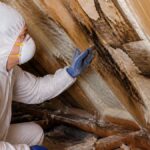
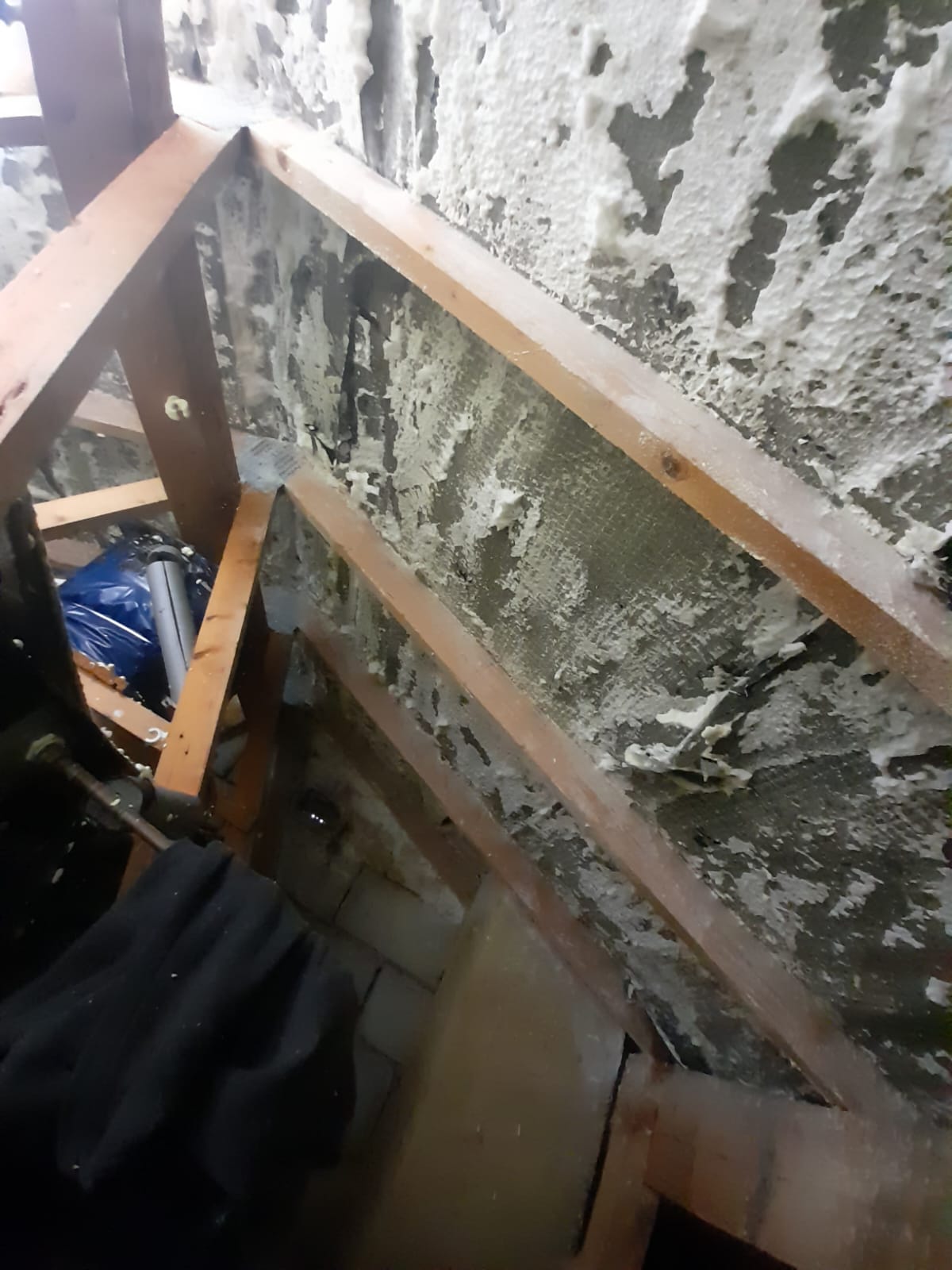
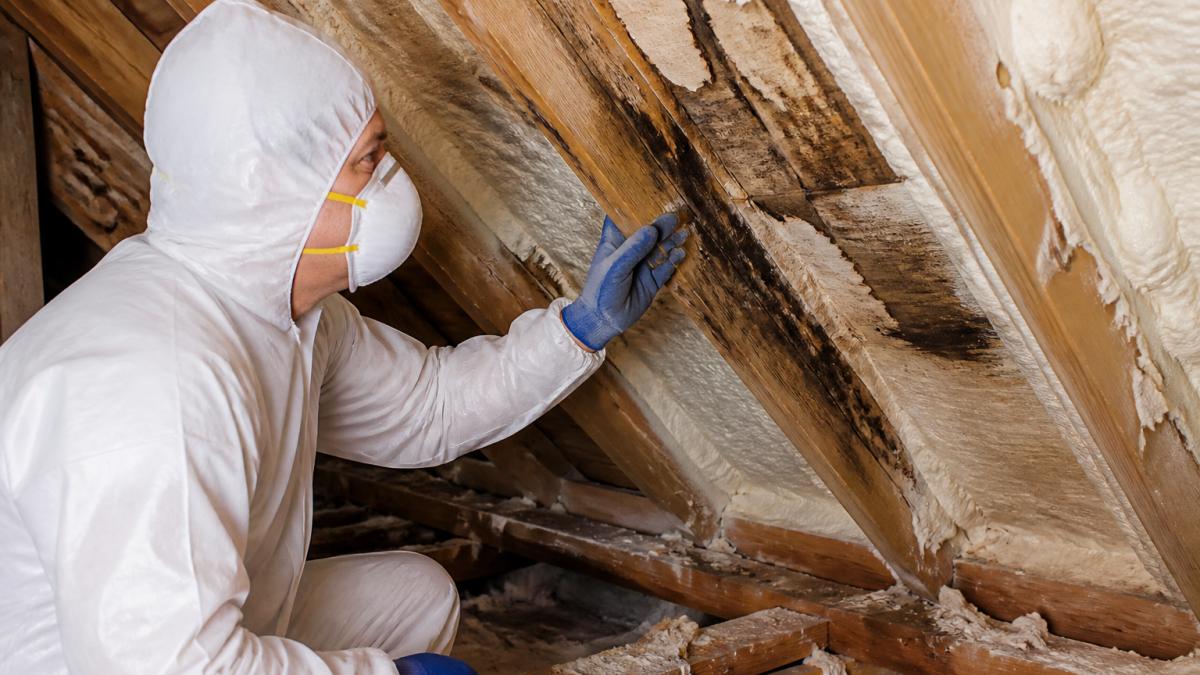
Yes, mould can grow behind spray foam insulation. It thrives in the dark, damp conditions foam creates. Because the foam hides the surface underneath, you often cannot see the mould until it has spread widely.
Signs to watch for:
Mould on timber is more than cosmetic: it breaks down the wood over time and signals ongoing moisture that needs fixing at the source.
Spray foam insulation and mortgage rejection are closely linked. Many lenders refuse to lend on properties with spray foam because they cannot confirm the roof is sound, the problem is not the foam itself, but what it might be hiding. Lenders rely on surveyors to confirm a property is safe security for a loan, and when foam blocks a proper inspection, the surveyor cannot give that assurance.
Surveyors look for signs that the roof structure is sound and dry, but foam prevents them from checking rafters, felt, and ventilation paths. Key concerns include whether moisture is trapped against timbers, whether airflow has been blocked, whether leaks are being concealed, and whether the roof can be properly assessed at all. When a surveyor cannot confirm these points, they flag the property and the lender declines, often meaning a stalled sale or a rejected equity release application.
Spray foam removal before selling a house is often the fastest way to unblock a sale. A buyer’s lender will usually require proof the roof is sound, and foam prevents a surveyor from giving that proof. Here is what the process involves, what it costs, how long it takes, and what the paperwork does and does not prove.
Lenders treat spray foam as a risk because it can conceal moisture damage, block ventilation, and prevent a surveyor from inspecting the roof structure. Lender positions vary: some decline any property with spray foam regardless of condition, others lend if a qualified contractor has removed the foam and issued a certificate confirming the roof is sound, and a smaller number lend with the foam in place if a structural engineer or specialist surveyor confirms the roof is dry and ventilated.
| Stage | What Happens | Typical Duration | Why It Matters |
|---|---|---|---|
| Assessment | Specialist inspects foam, timbers, and ventilation; takes moisture readings | 1-2 hours | Confirms scope and whether repairs are needed |
| Quotation | Itemised quote covering removal, disposal, repairs, and certification | 1-3 working days | Lets you compare like-for-like and budget properly |
| Containment and removal | Loft sealed off; foam cut, scraped, or milled from timbers | 1-5 days depending on roof size and foam type | Exposes roof for inspection |
| Timber inspection and repair | Rotten or damp timber treated or replaced; ventilation restored | 1-5 days, longer if structural repair is needed | Restores structural integrity |
| Certification | Certificate issued confirming roof inspected and sound | Same day to a few days after completion | Satisfies lender requirements |
For a typical three-bedroom semi with a standard pitched roof, removal usually takes one to three days on site. Larger or complex roofs, or those needing significant timber repair, take longer. Access (scaffolding, loft hatch size, roof pitch) is often the biggest variable.
Costs vary widely depending on roof size, foam type, access, and whether repairs are needed. As a rough guide:
Because prices vary so much by property, the only reliable figure is a written quote after an inspection. Be wary of any quote given over the phone without a site visit.
A quote should itemise:
A removal certificate typically confirms that the foam has been removed, the roof timbers inspected, and any identified defects addressed.
It does not guarantee the roof will never leak, and it does not replace a full building survey.
At IUEX, our trained roofers are fully certified to issue Mortgage and Equity Release Certificates, ensuring your home’s value is protected and ready for future plans like loft conversions.
Full removal is not always the only route. Depending on foam type, condition, and lender, alternatives include:
These routes are not always cheaper, and not all lenders accept them. Discuss the options with your broker and a specialist contractor before committing.
Pro Tip: If you are selling, get the foam assessed before you list the property. Finding out at valuation stage that your buyer’s lender will not proceed costs you weeks and can lose the sale. A pre-listing assessment and certificate puts you in a much stronger negotiating position.
Use the triage below to sort your situation into one of three tracks.
Treat the situation as urgent if any of the following are true:
What to do:
Watch Out: If the ceiling below the loft is bulging, sagging, or showing a brown water stain that is growing, keep people out of the room underneath and call a professional immediately. A saturated ceiling can collapse.
Treat the situation as a priority if:
What to do:
You may be able to leave the foam in place if all of the following are true:
Even in this case, review the situation every 12 months. Check for new smells, staining, or condensation after heavy rain, and get a fresh inspection every few years. Foam that is fine today can become a problem after a single unnoticed leak.
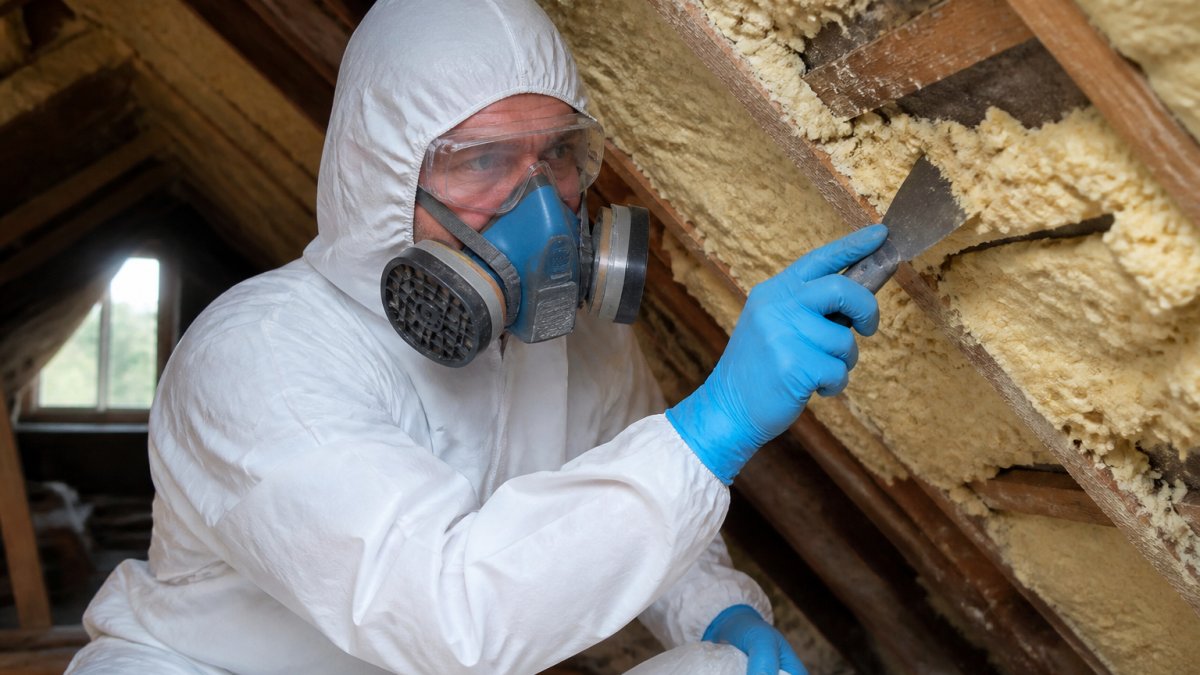
If you do decide to remove the foam, here is what to expect. This is not a DIY job for most homeowners.
Call a specialist if any of the following apply:
A professional assessment is usually free or low-cost, and it is the fastest way to know whether you have a weekend problem or a this-minute problem.
Pro Tip: If you are planning a loft conversion, get the foam assessed before you brief an architect or builder. Removal and any roof repairs need to happen before conversion work starts. Doing it the other way round means paying twice for access and scaffolding.
Leaving foam in place rarely saves money.
The good news is that removal is a solvable problem. It restores your roof’s ability to breathe and gives you the paperwork lenders need.
IUEX has over 15 years of hands-on experience and more than 3,600 successful projects.
Get a quote from IUEX and get your property back on track.
Yes. Spray foam applied directly to the underside of a roof can seal off ventilation paths, trapping warm, moist air from the living space against cold roof timbers. That condensation creates the damp conditions mould needs. Because the foam hides the roof deck and rafters, mould can spread for years before anyone notices. By the time it becomes visible, timber decay may already have started, which is why many homeowners only discover the problem during a survey or when damp patches appear on ceilings.
It can. Many lenders treat spray foam as a risk because it hides the roof structure and can trap moisture, making the property harder to value. A surveyor may flag it as requiring further investigation or recommend removal before lending proceeds. Some lenders decline outright, while others will consider the property once a certified removal and reinstatement certificate is provided. If you are remortgaging or selling, check with your lender early rather than waiting for a valuation to stall the process.
Not always. Open-cell foam that is thin, dry, and correctly installed with adequate ventilation may be acceptable to some lenders, particularly if it was applied between rafters rather than across them. Closed-cell foam applied directly to the roof deck is the type most likely to cause problems because it seals the structure completely. The deciding factors are foam type, thickness, installation quality, and whether moisture is already trapped. A professional inspection is the only reliable way to know which category your property falls into.
Warning signs include musty smells in the loft, condensation on roof timbers, soft or discoloured wood, damp patches on upstairs ceilings, and higher-than-expected heating bills. From inside the loft, check whether the foam feels spongy, saturated, or has pulled away from the rafters. If the foam is wet to the touch, stop and call a specialist rather than probing further, because disturbing saturated foam can release trapped water into the ceiling below. A surveyor or removal specialist can assess the extent of any hidden damage.
What Happens If You Don’t Remove Foam Insulation? Home What…

Property Value Impact of Spray Foam: 2026 Guide Home Property…
Spray Foam Removal Safety Standards: A Complete Guide Home Spray…


For a hassle free simple Spray Foam Removal solution,with gaurantees for Mortgage acceptance. With a All inclusive fully comprehensive solution as standard. iuex.co.uk is un rivaled in this industry.
With Offices.
– Lewes – Devon
– Birmingham – Edinburgh
– Leeds – Cambridge
– Macclesfield
– Northern Ireland
– Wokingham