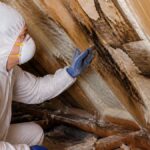
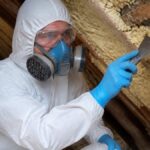
The property value impact of spray foam is now one of the most contested issues in residential lending. A growing number of homeowners are discovering that insulation installed years ago can stall a sale, trigger a mortgage rejection, or force a renegotiation at the eleventh hour. At IUEX, we have spent over 15 years removing spray foam and restoring properties to a mortgageable condition, completing more than 3,600 projects along the way.
The effect on value is rarely about the insulation itself. It is about what lenders, surveyors and buyers can verify.
Spray foam insulation is a polyurethane-based material applied to roof timbers and loft surfaces to improve thermal performance. Unlike traditional mineral wool, it bonds directly to the structure, which makes it difficult to inspect and expensive to reverse.
Lenders treat spray foam as a material risk, not a thermal upgrade. When a surveyor cannot confirm the condition of roof timbers beneath the foam, the valuation is often issued as “retention” or declined outright. That single line in a report can remove a property from the market for months.
The challenge is structural, not cosmetic. A surveyor’s job is to confirm that the property offers adequate security for a loan over 25 years or more. Foam that hides the roof structure prevents that confirmation.
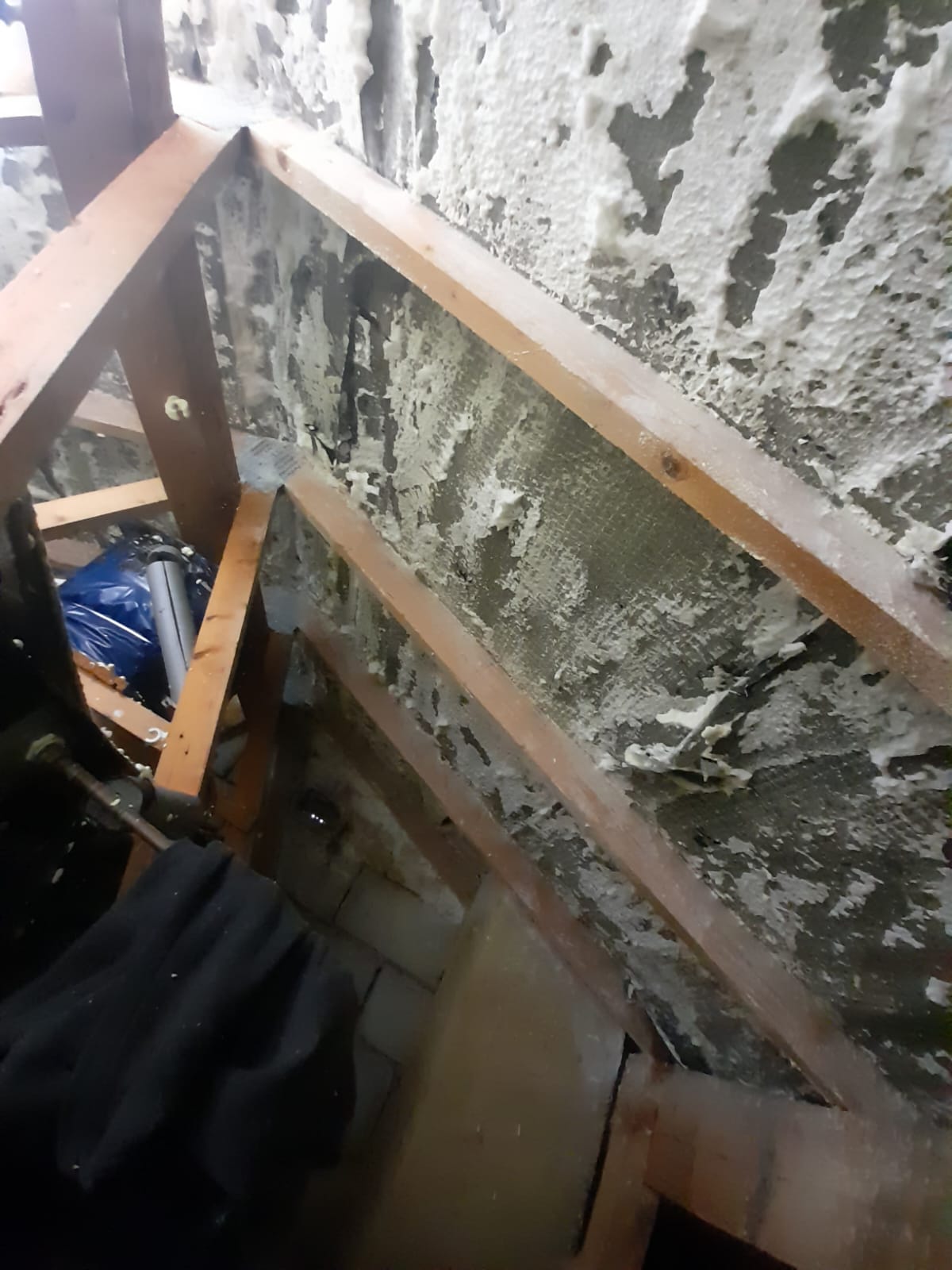
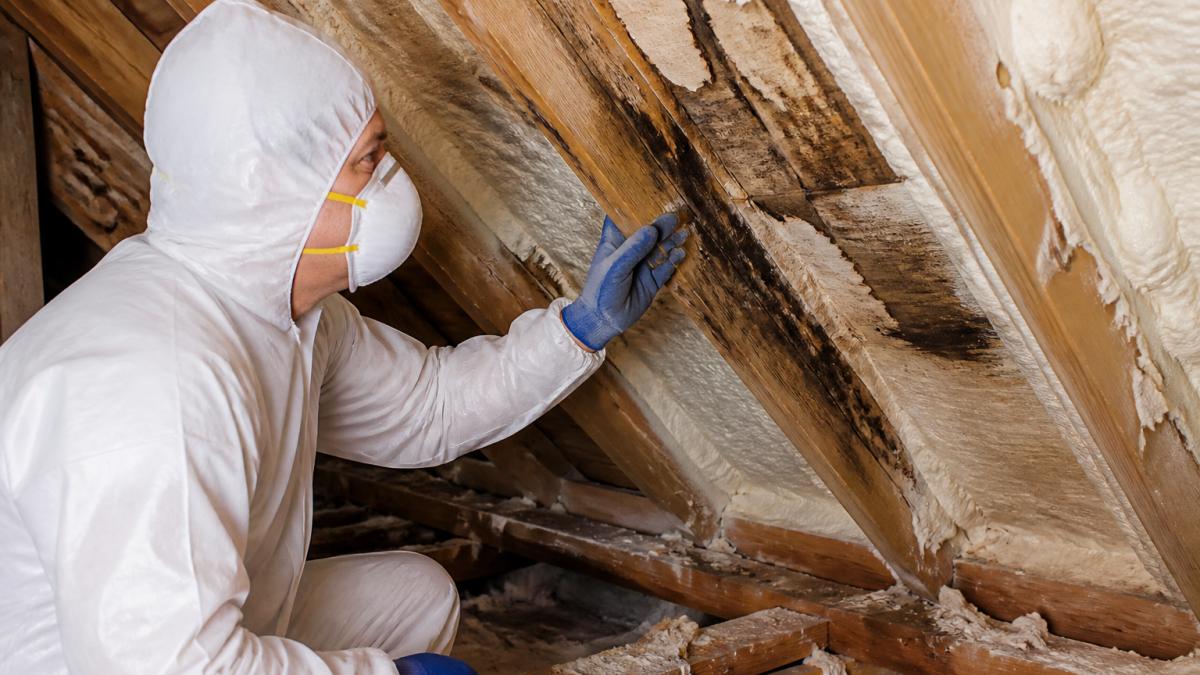
Trapped moisture is the core problem. Closed-cell foam creates an impermeable barrier, so any water vapour that reaches the roof deck from below has nowhere to go (Moisture risk of spray foam insulation applied to timber sloped roofs). Over time this leads to condensation, timber decay and, in serious cases, rot in the rafters and battens.
Open-cell foam behaves differently. It allows some vapour movement but can still trap water if ventilation is poor. Both types carry risk when installed without a proper risk assessment of the roof build-up.
Watch Out: The most common mistake is assuming that no visible damp means no problem. Rot and timber decay often develop behind the foam, out of sight, and are only discovered when removal begins. By then, the repair bill includes both insulation removal and structural joinery.
Spray foam insulation mortgage rejection is now routine rather than exceptional. Lenders including several high-street names have tightened criteria, and a property with foam in the roof is frequently flagged for further inspection or refused outright.
The practical consequence is severe. A rejected mortgage does not just affect the current buyer. It becomes part of the property’s history, and any future buyer’s lender will ask the same questions.
Lenders refuse for three reasons: unverifiable roof condition, uncertainty over remediation cost, and concern that the property cannot be easily sold if they need to repossess. The Royal Institution of Chartered Surveyors guidance on roof insulation sets out how surveyors should assess insulation that limits inspection of the roof structure.
A Homebuyer Report is where most problems surface. Surveyors working to RICS standards will note foam that prevents inspection of roof timbers, and that note becomes a condition of lending. Some lenders will accept a property only if the foam is removed and a certificate is provided confirming the roof is sound.
That is where certification and compliance matter. IUEX is fully certified to issue Mortgage and Equity Release certificates, which is what turns a stalled transaction into an approved one.
RICS guidance on spray foam centres on one question: can the roof structure be properly inspected? If the answer is no, the surveyor must report it as a defect or a limitation on the inspection.
In practice, surveyors look for:
A surveyor is not required to prove damage exists. They only need to state that they cannot confirm it does not. That distinction is what makes spray foam so damaging to a valuation.
The cost of spray foam removal is the single most searched follow-up question once a homeowner learns their insulation is a problem. Most content stops at “it depends”, which is useless when you are trying to decide whether to attempt the work yourself or instruct a contractor. The honest answer is that cost is driven by five variables, and the DIY-versus-professional decision turns on three of them.
| Factor | How It Moves the Price | Why It Matters |
|---|---|---|
| Foam type | Closed-cell sits at the top of the range; open-cell is lower | Closed-cell is denser, bonds harder to timber, and generates more waste volume |
| Coverage area | Scales broadly with the treated roof area | Material, labour hours and disposal all rise together |
| Access | Restricted lofts, low headroom and no loft hatch add cost | Some jobs need a temporary platform or partial roof access |
| Hidden damage | Treated as a separate joinery line | Rot repair, rafter replacement and batten renewal are not removal costs |
| Certification | A compliance step, not a labour step | Without it the lender will not release funds regardless of how clean the removal is |
A common pattern practitioners see is that the removal itself is the smaller part of the invoice. Once foam is stripped, the roof timbers are inspected, and any decay found is remediated before reinstatement. That sequencing is why a fixed price quoted before a survey should be treated with suspicion, the contractor cannot know what is under the foam until it is off.
DIY is sometimes viable for small, open-cell installations with clear access and no signs of damp. In practice it means:
The risks are real. Foam dust is an irritant, aggressive scraping damages rafters and battens, and, critically, a DIY job produces no certificate. A lender will not accept a homeowner’s own removal as evidence that the roof is sound, so the mortgage problem remains even if the foam is gone.
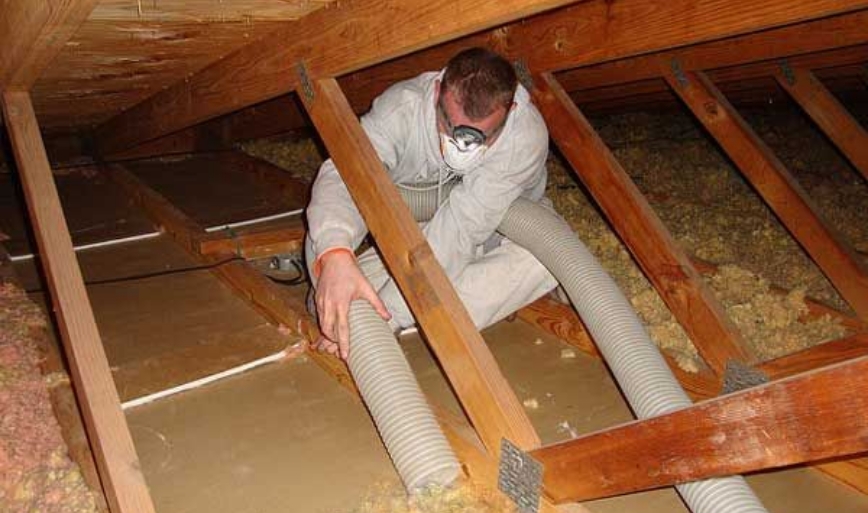
Professional removal is not simply faster labour. It bundles four things a DIY job cannot replicate:
Pro Tip: When comparing quotes, ask for the removal, the timber inspection and the certificate to be itemised separately. A single lump sum hides which of the three you are actually paying for, and the certificate is the only line that changes your lender’s position.
DIY can reduce the visible labour cost but leaves the certification gap, the disposal liability and the structural risk with the homeowner. Professional removal costs more up front but converts an unsellable property into a mortgageable one. For most homeowners facing a stalled sale, the professional route is the cheaper option once the cost of a failed transaction is counted.
Insurance is the angle most homeowners miss until it is too late. Mortgage lenders get the headlines, but a building insurance policy can be quietly invalidated by the same installation, and unlike a declined mortgage, an insurance dispute usually surfaces at the worst possible moment, after a claim.
Most household policies require the policyholder to disclose material changes to the property that affect risk. Spray foam applied to roof timbers can trigger that requirement in three ways:
The practical consequence is that a homeowner can hold a valid-looking policy, pay premiums for years, and still find a roof-related claim refused. That is a different risk from mortgage rejection, and it is rarely discussed alongside it.
Compliance is the other half of the picture. Building regulations require adequate ventilation in roof spaces to manage moisture and protect the structure (Ventilation: Approved Document F). Foam that blocks ventilation paths, particularly at eaves and ridge, can take a property outside those requirements, regardless of how well it performs thermally.
This matters for two reasons. First, non-compliant work can be flagged by a surveyor and become a lending condition. Second, it can be raised by an insurer assessing a claim. The same defect creates exposure on both sides.
Homeowners can do a useful first-pass check without a surveyor:
A BBA certificate is not a guarantee that the installation was done correctly, but its absence is a strong signal that the product was not assessed for use in that position. Installations without third-party product approval are the ones most likely to be challenged by both lenders and insurers.
Watch Out: Do not assume that a policy renewal letter mentioning insulation means the insurer has accepted the installation. Renewal is not the same as underwriting the specific risk. If in doubt, disclose the foam in writing and keep the response.
A buyer’s solicitor will raise standard enquiries about alterations and insurance. An undeclared spray foam installation can surface there, and the buyer’s lender will then ask the same questions the seller’s lender asked. Addressing compliance and insurance together, not just the mortgage, is what makes a property genuinely saleable rather than temporarily acceptable to one lender.
Key Takeaway: The insurance and compliance angle is the one most homeowners only discover after a claim or a failed sale. Verifying product approval, ventilation and disclosure early is cheaper than remediating the consequences later.
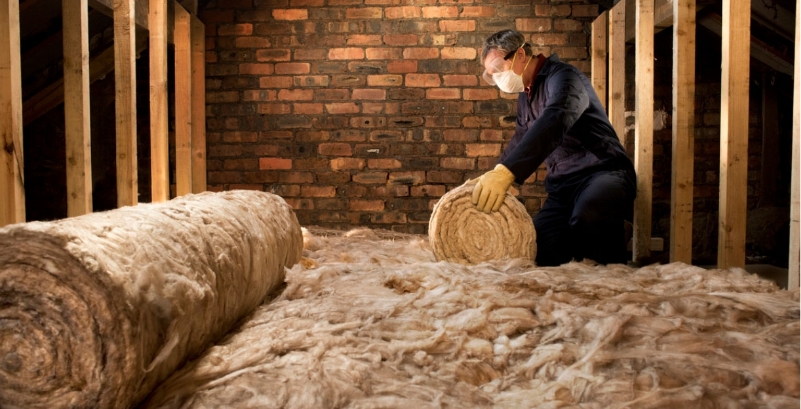
Once the foam is gone, the roof needs insulation that lenders, surveyors and insurers can all live with. The options that work in practice are:
The rule is simple: the roof structure must remain inspectable and ventilated. Any insulation that hides the timbers or blocks airflow recreates the problem you just paid to remove.
Spray foam does not have to end a sale or a remortgage, but it will if the paperwork and the roof structure cannot satisfy a lender. IUEX has completed over 3,600 successful projects and holds a 100% approval rate for mortgage and equity release funding, issuing the Mortgage and Equity Release certificates lenders require. Our trained roofers handle safe extraction, timber inspection and reinstatement to a compliant standard, restoring both thermal efficiency and structural integrity. Get a quote from IUEX and move your property transaction forward.
Spray foam insulation does not automatically make a house unmortgageable, but it often leads to mortgage rejection. Many lenders consider it a risk because it can trap moisture, cause timber decay, and hide structural defects. If a surveyor flags spray foam, the lender may refuse a mortgage until it is removed and a certificate is provided. Some lenders accept properties with spray foam if a qualified specialist confirms it is safe and provides a Mortgage & Equity Release Certificate. Without that, buyers struggle to get finance.
Signs include a mortgage application being declined, a surveyor noting spray foam in the homebuyer report, or visible damp and condensation in the loft. Lenders rely on RICS guidance on spray foam, which highlights risks like moisture ingress and roof timber damage. If your lender has rejected the property, you likely need a professional assessment and removal. A certified removal specialist can issue a certificate that satisfies lenders and equity release providers.
RICS guidance on spray foam requires surveyors to report on its presence and condition, noting risks such as trapped moisture, condensation, and difficulty inspecting roof timbers. Surveyors must assess whether the foam is open-cell or closed-cell, as closed-cell foam is more likely to cause problems. They also check for ventilation and breathability. If defects are found, the surveyor recommends further investigation by a specialist. This report often triggers mortgage rejection, making professional removal necessary.
Yes, removing spray foam is often worth it to sell your house. A property with spray foam can be devalued, difficult to mortgage, and may sit on the market for months. Professional removal restores structural integrity, resolves damp issues, and allows you to obtain a certificate that lenders accept. While there is a cost of spray foam removal, it is usually far less than the equity lost from a failed sale or a reduced offer. Many homeowners find that removal unlocks their property transaction.
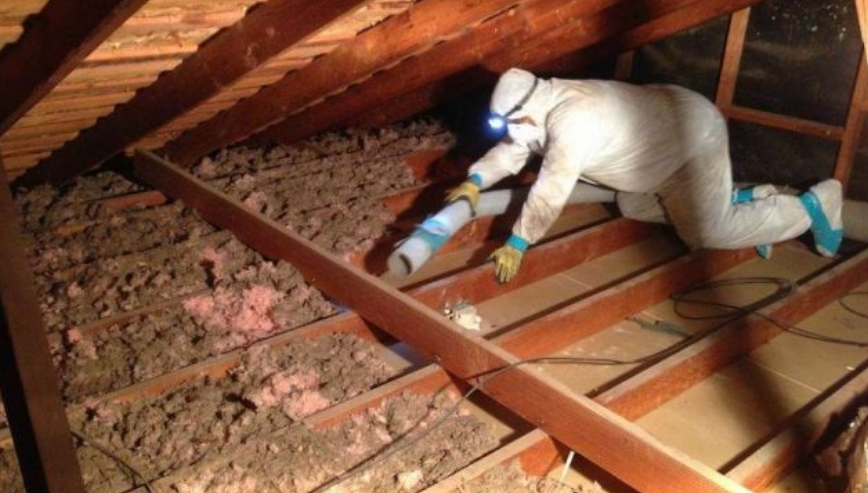
What Happens If You Don’t Remove Foam Insulation? Home What…

Property Value Impact of Spray Foam: 2026 Guide Home Property…
Spray Foam Removal Safety Standards: A Complete Guide Home Spray…


For a hassle free simple Spray Foam Removal solution,with gaurantees for Mortgage acceptance. With a All inclusive fully comprehensive solution as standard. iuex.co.uk is un rivaled in this industry.
With Offices.
– Lewes – Devon
– Birmingham – Edinburgh
– Leeds – Cambridge
– Macclesfield
– Northern Ireland
– Wokingham